
Growth & Revenue Engineering
Cadenic Studios builds the machinery that brings people to a product and turns them into revenue: programmatic pages at scale, search and answer-engine optimisation, conversion instrumentation, email, and affiliate or partner commerce.
An audience that arrives on its own. The pages come out of a dataset instead of getting written one at a time. They are structured so a search engine and an answer engine can both quote them, and instrumented so you can tell which of them produced money.
What it gets hired to build
8 kinds of project
- Programmatic page generation from your own data
- Technical SEO: schema, sitemaps, canonicals, Core Web Vitals
- Answer-engine optimisation for ChatGPT, Perplexity and AI Overviews
- Landing pages and campaign infrastructure
- Conversion tracking and revenue attribution
- Lifecycle and transactional email
- Affiliate, partner and referral systems
- Local and multi-location search presence
That list shows the shape of the work. It is neither complete nor a menu of packages. If what you are building is not on it, the question is whether it is the same kind of problem, and that is a short conversation.
This is the half of the work most studios hand back to you. A site that nobody finds is a brochure with better typography, so we treat acquisition as an engineering problem: pages generated from a typed dataset instead of written one at a time, structured data on every one of them, a machine-readable brief for the answer engines that increasingly sit between a question and a click, and instrumentation that says which of it actually produced money. Where a business earns through partners or affiliates, that plumbing goes in at the start. Behind this service is more than a decade of building marketing and revenue engines, all of it before Cadenic existed.
What you get
- 01Long-tail pages produced from a dataset rather than written by hand
- 02Structured data, sitemaps and an llms.txt across the whole surface
- 03Analytics and conversion instrumentation you can read without us
- 04Email capture, sequences and deliverability set up properly
- 05Affiliate and partner tracking where revenue depends on it
- 06A written account of what moved the numbers, and what was a dead end
Stack
- JSON-LD
- llms.txt
- Search Console
- Resend
- Amazon Associates
- Impact
- Vercel Analytics
Proof
Two pieces of work for this service, both live and both ours. Either one opens in a click.
Evidence 01
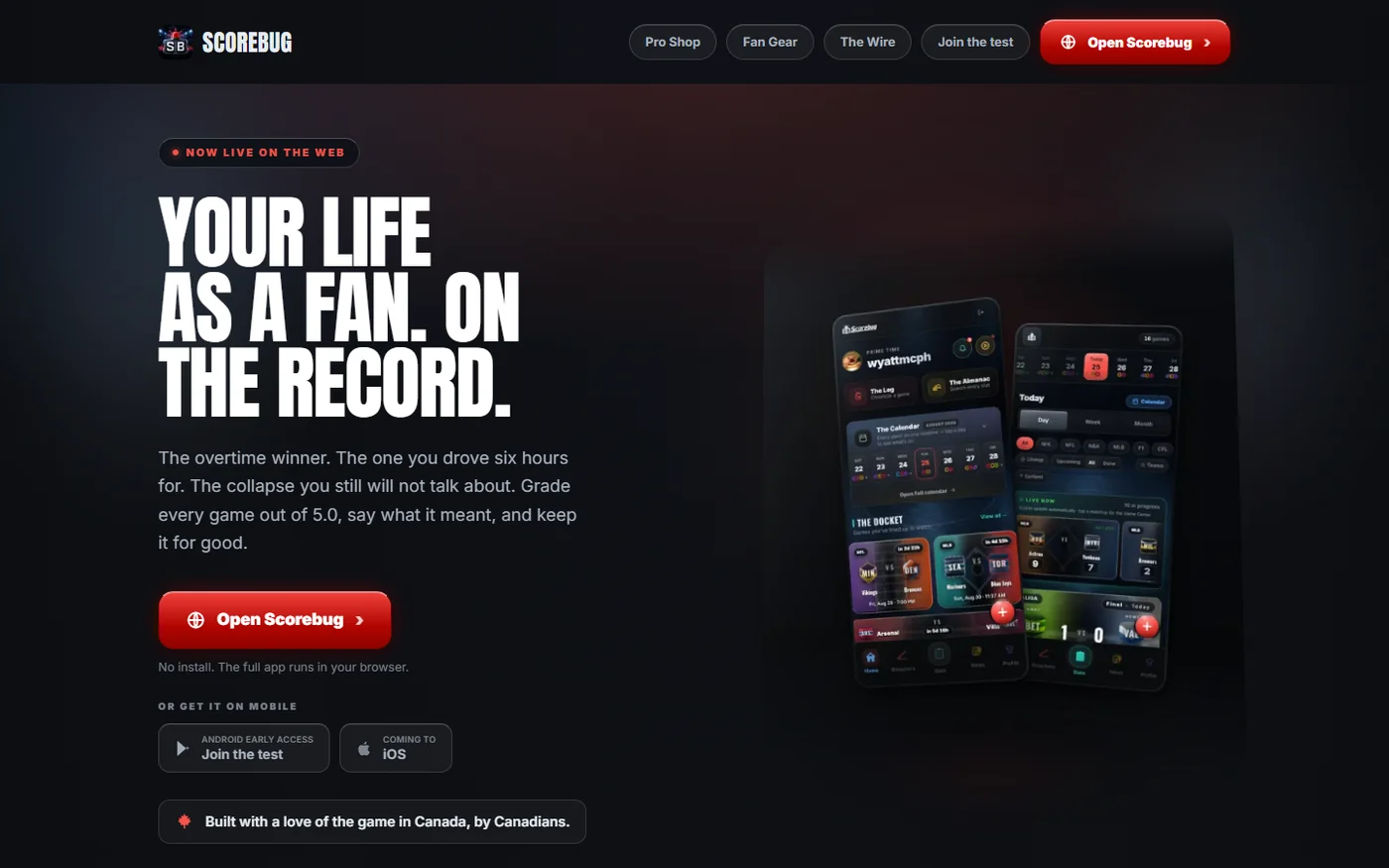
getscorebug.app is the growth half in production. Fifteen route files generate more than two hundred pages. Nineteen leagues, a hundred and fifty-four club gear pages, forty-seven rivalry matchups, and every one of them written once and produced from a typed dataset. Each carries structured data, and the site publishes a machine-readable brief at /llms.txt, because the questions those pages answer are increasingly put to a model rather than typed into a search box.
- pages from 15 route files
- 234
- club pages, generated
- 154
- Long-tail pages that answer questions people actually type, every one of them generated
- One constant, LAUNCH_STAGE, owns every availability claim on the site: nav button, hero, membership call to action, footer and structured data
- Amazon Associates and partner links across a hundred and fifty-four clubs, each disclosed on the page it appears on
Evidence 02

The same machinery, pointed at a completely different subject. playdeltav.space publishes 549 URLs. Behind them sit a sixty-vehicle launch registry with 5,246 flights credited across it, a 366-day almanac cross-linked date by date, and a manifest of every upcoming launch. Almost none of it was written by hand. That is what "programmatic" is for: a subject with a long tail nobody is going to type out one page at a time.
28 routes, almost none of them static · 366 days of almanac, cross-linked · 60 launch vehicles on the register
- 549 URLs, all of them produced from data and cross-linked to each other
- IndexNow pings on publish, a dynamic social card per launch, and a calendar file a visitor can subscribe to
- Structured data and a plain-text brief at /llms.txt across the whole surface
Where it stopsThe proof here is first-party and structural. Every live page across the studio's three properties was generated, indexed and instrumented by the same hands writing this, and the running total on the home page is counted off the three sitemaps. What you can check is the machinery and the surface it produces. There is no traffic chart on this page, because a screenshot of an analytics dashboard is not something a reader can verify.
See getscorebug.appThe rest of the practice
Three more, same discipline
Cadenic Studios runs five services and they are the same practice pointed at different surfaces. Most projects touch more than one.
- 01Web & Application DevelopmentSoftware with accounts, roles and real data, and an admin surface your own team can run.
- 03Native App DevelopmentGet the app into the store, with the billing and the release process handled.
- 04Headless CommerceOwn the storefront; leave the catalogue, the checkout and the money where they are.
- 05Discord & Community EngineeringA server built from a script, a bot that answers from your live data, and an address you own.
Method
How a project runs
The same five steps for every service. Nothing is committed to a build until the scope is written down and agreed. The studio page sets all five out in full, with what each one produces.
- 01Brief
- 02Call
- 03Scope
- 04Build
- 05Handover
Start a project
Tell us what you are building
Send the scope, the timeline and a budget range. Wyatt McPherson replies to every enquiry in writing. A short call, then a scoped estimate.