

playdeltav.space
A live console for everything leaving Earth
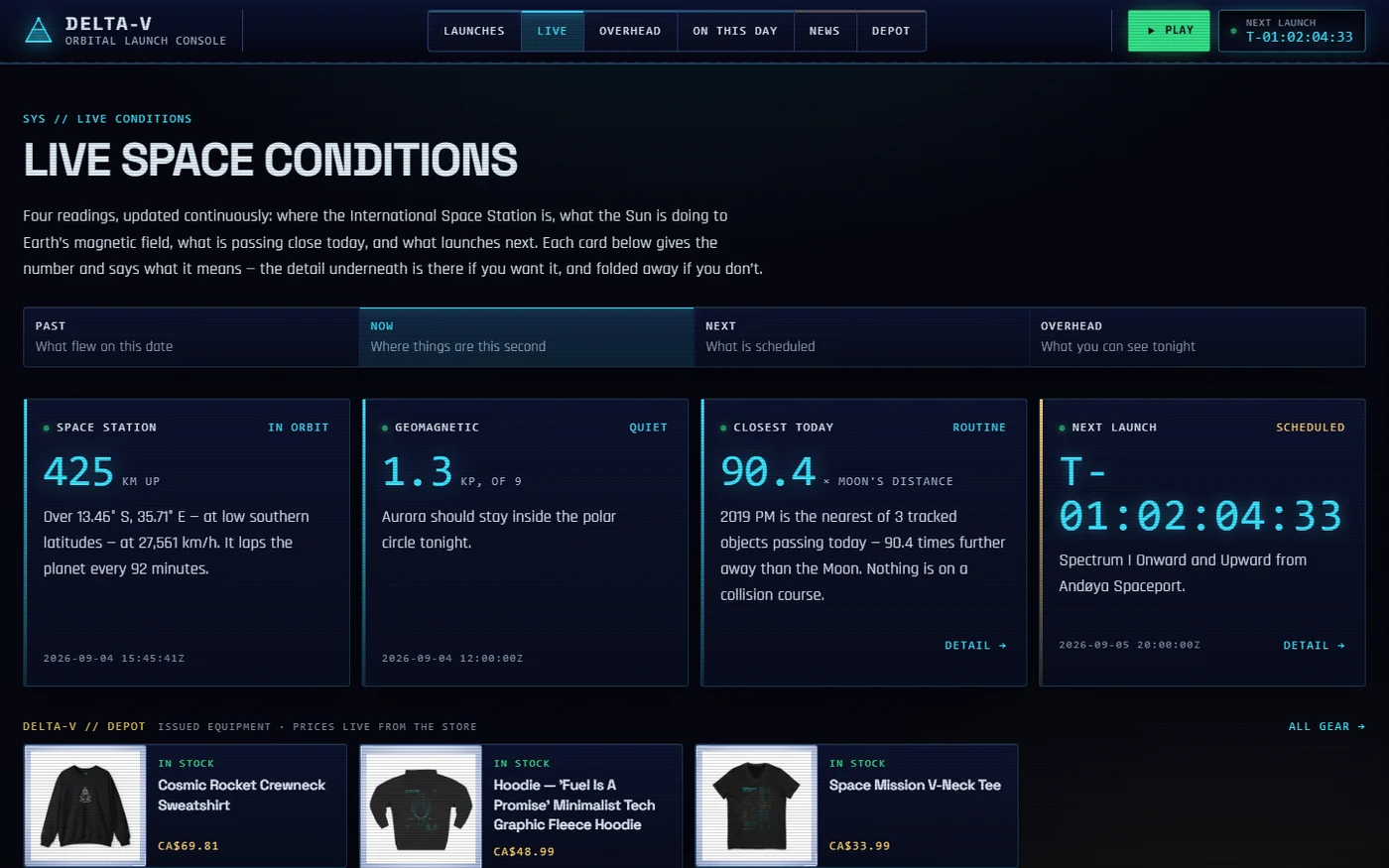
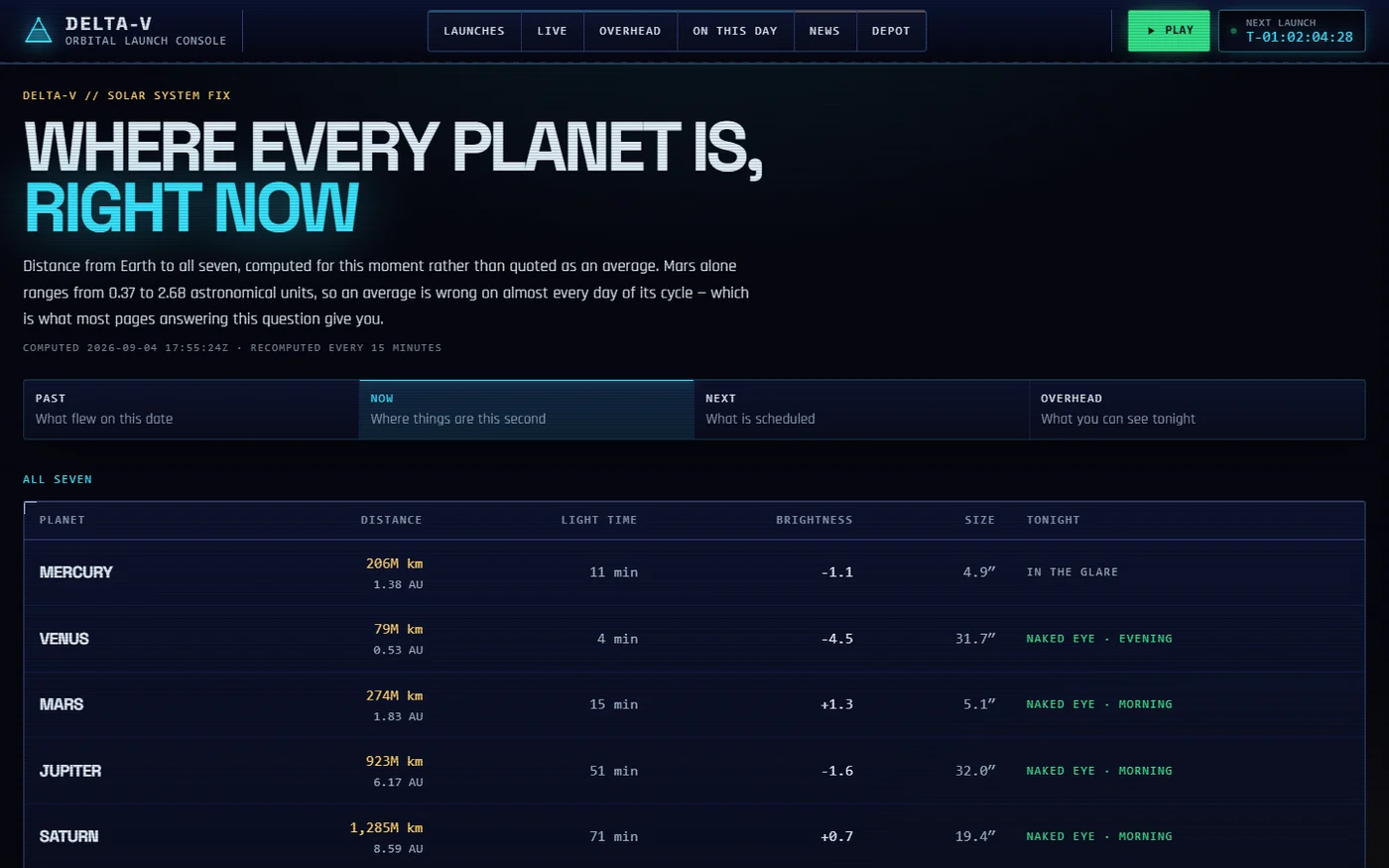
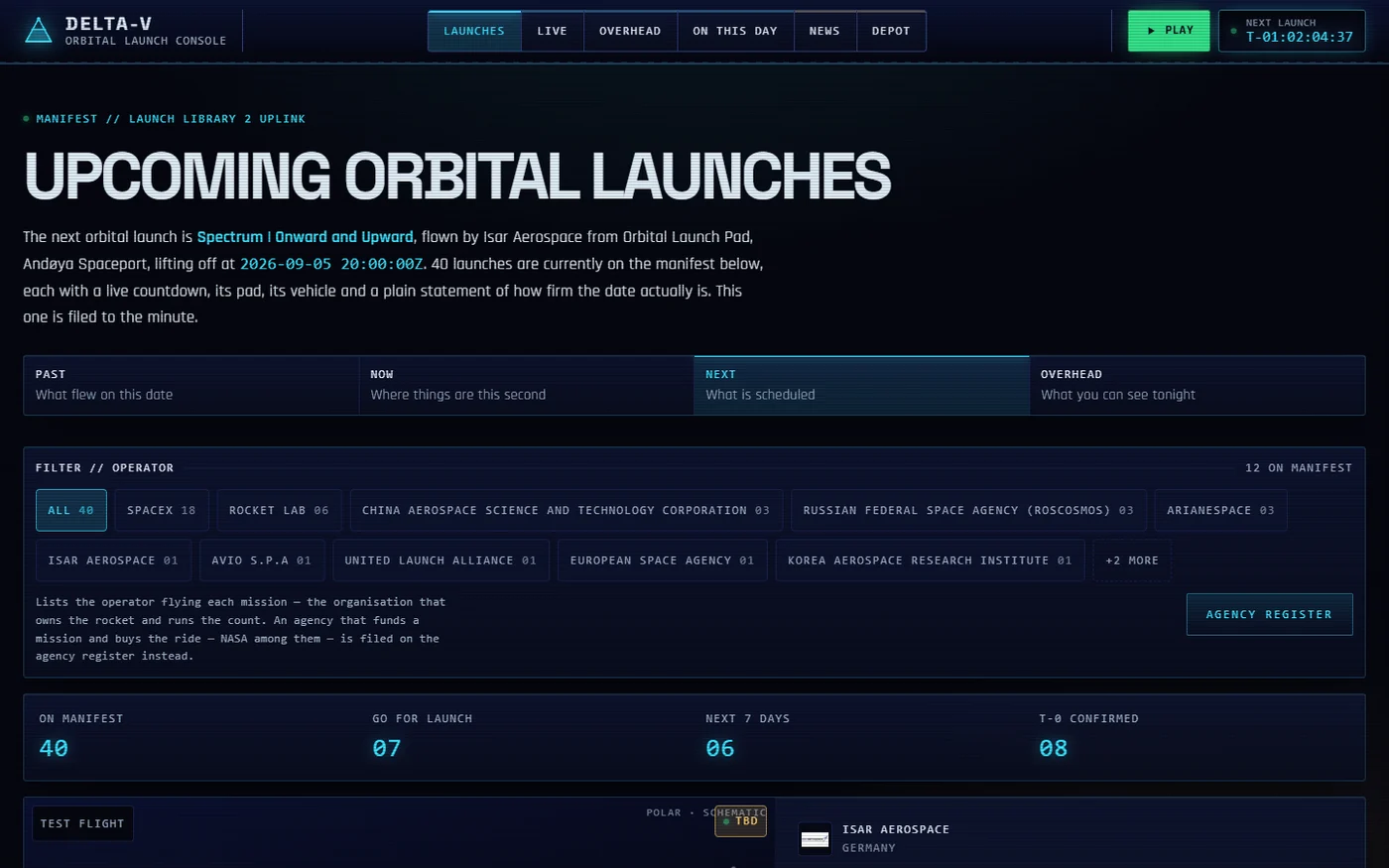
playdeltav.space is Delta-V's companion site and the studio's heaviest data build: live launch countdowns, the position of the International Space Station updated continuously, real-time distances to every planet, a registry of sixty launch vehicles, a year-round almanac and a headless Shopify depot.
- Status
- Live
- Year
- 2025 – present
playdeltav.space, the live site
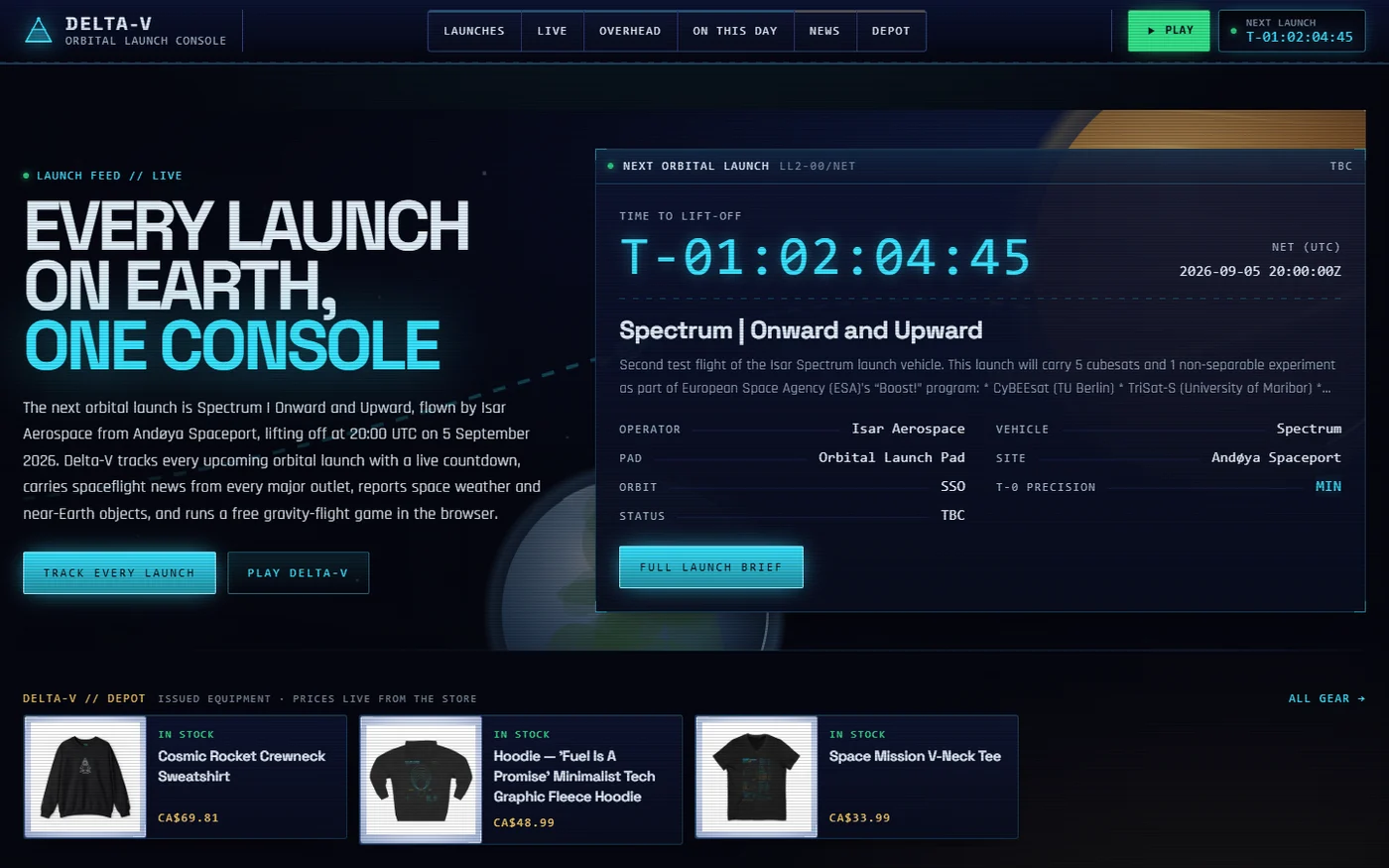
01Brief
The problem
A game about orbital mechanics deserved a companion that was actually about orbital mechanics, not a screenshot gallery with a download button. The hard part is that almost nothing on it can be written in advance: a countdown, a station's position and a planet's distance are all wrong the moment they are cached, and each has a different tolerance for how wrong.
02Measured
By the numbers
The figures that describe the shape of the build. Each one was read off the live site itself.
28
routes, almost none of them static
366
days of almanac, cross-linked
60
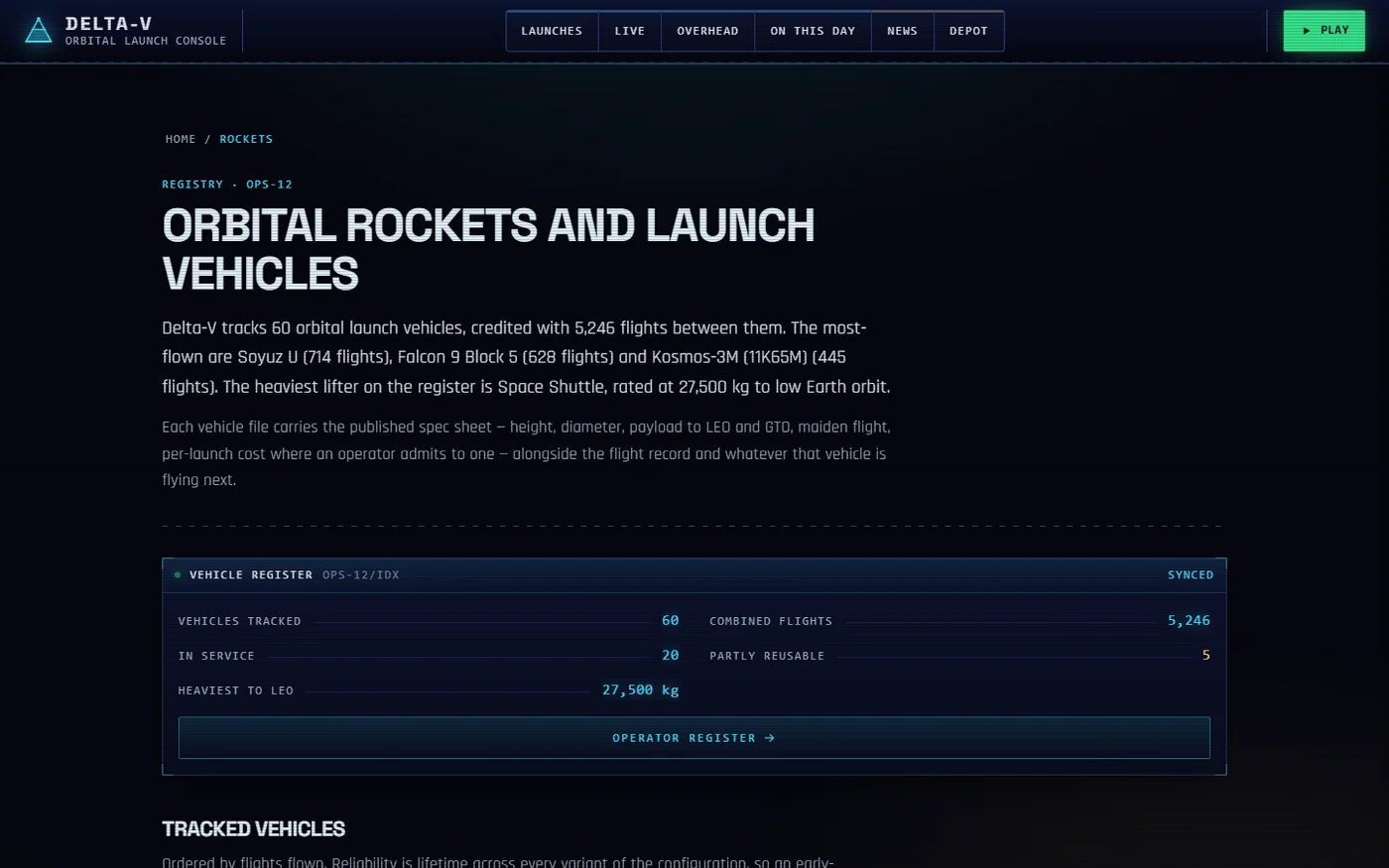
launch vehicles on the register
Counted from the live sitemap · 4 September 2026
- 549URLs on the live sitemap, the largest surface the studio operates.
- 5,246flights credited across the vehicle registry.
03Process
The build
Decision by decision: how it is put together, and what each one bought.
01ALMANAC ROUTE
366DAYS
Fifteen plates are drawn individually. The stack at the end of the last row stands for the remaining 351.
Every readout has a stated freshness budget
The station covers about seventy-seven kilometres in ten seconds, so the upstream read is cached for ten and the response is marked no-store. A CDN holding it for a minute would draw the station four hundred and sixty kilometres behind where it is. Launch manifests, planet positions and the almanac each get their own interval for the same reason. Cache policy here is a design decision taken once per readout.
Positions computed from orbital elements
Planet distances are calculated from orbital elements at request time rather than read from a feed, so the page can say where every planet is right now and explain why that is different from the average anybody quotes. The globes are rendered from topology data with d3-geo on the server, so no map tiles are ever requested.
A registry, an almanac and a manifest
Sixty orbital launch vehicles with their flight histories, a three-hundred-and-sixty-six-day almanac of what happened on each date, and an upcoming-launch manifest with per-launch calendar export. All of it is generated, cross-linked and given structured data, which is why the site ranks for questions nobody wrote a page for.
A depot that is a real store
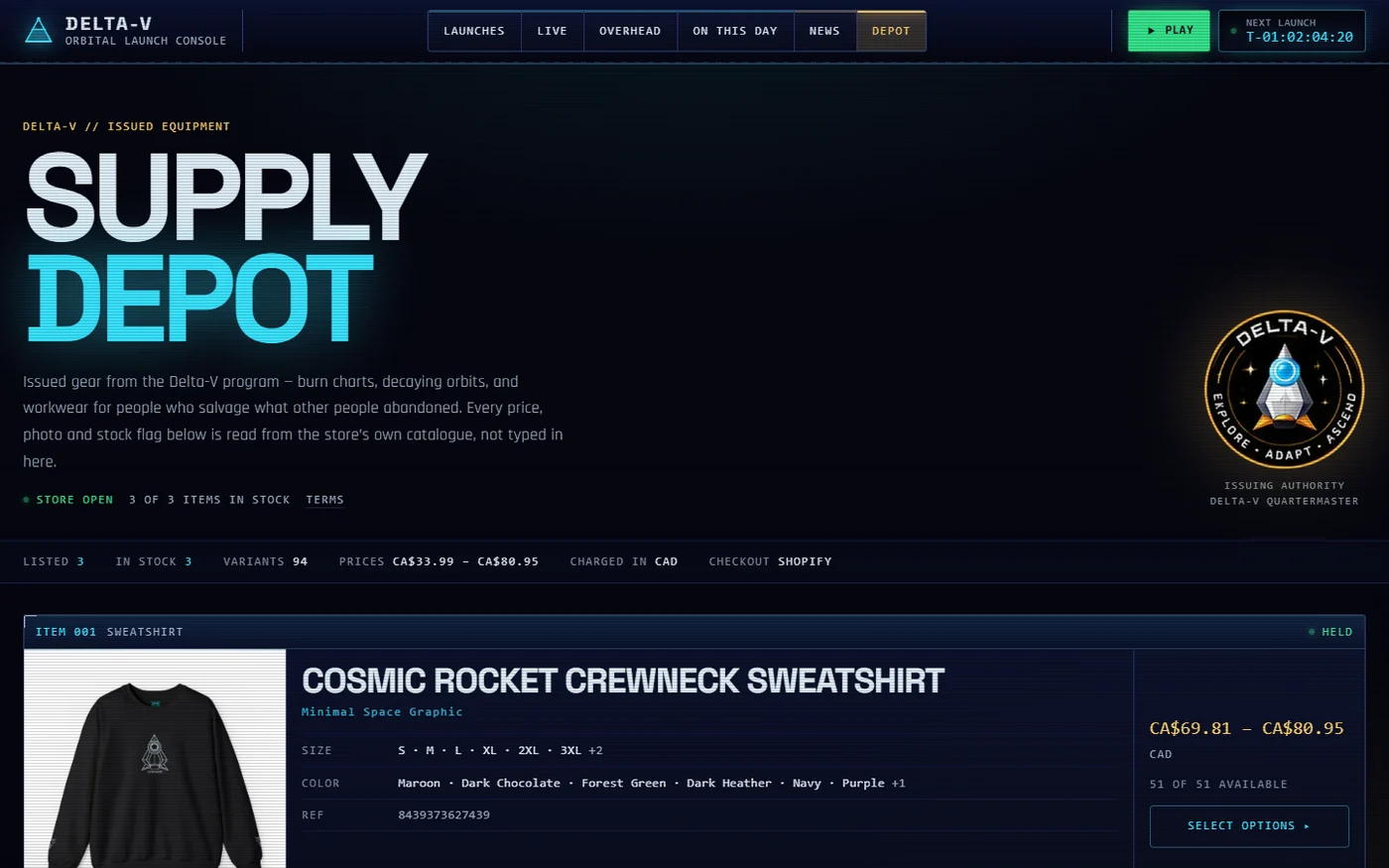
The supply depot runs headlessly against the Shopify Storefront API: product and variant queries, cart, and a hand-off to Shopify's own checkout. Merchandising stays where a merchant expects it, and the storefront is entirely ours.
The machine-readable half
Dynamic social cards generated per launch, calendar files a visitor can subscribe to, IndexNow pings on publish, and a complete plain-text brief at /llms.txt. Most of the site's surface area is built for something other than a human browser, which is increasingly where the traffic decides to come from.
04Pages
Selected pages
Every page here was captured from the live site and set at the width a page is actually read. Each is cut to its own capture and runs at full measure, because a page shrunk into a column is a page nobody can read.
05Stack
What it runs on
The tools in production, grouped by the job they do.
- Application
- Next.js 16
- React 19
- TypeScript
- Tailwind CSS v4
- Framer Motion
- Live data
- Launch Library
- ISS telemetry
- Geomagnetic index
- Close approaches
- Computation
- Orbital elements
- d3-geo
- TopoJSON
- Commerce
- Shopify Storefront API
- GraphQL
- Distribution
- Dynamic OG images
- ICS calendar export
- IndexNow
- Resend
- llms.txt
